
Creating Between Borders
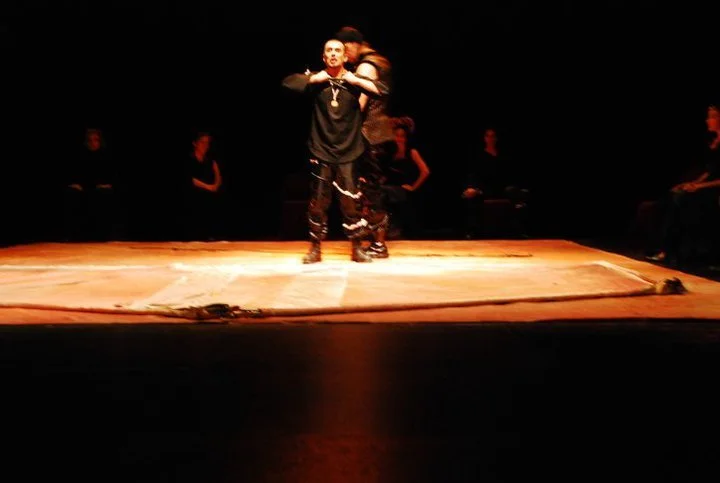
Ricardo III, Dirección Angel Norzagaray. Mexico Tour. 2009/2010
The Artist I Became Could Not Have Been Made in One Country
By Héctor Zavala
For the first two weeks of rehearsal, I stayed in my lane.
I had returned to Mexicali after living in the United States for about five years, and I had been given the opportunity to work with the late director Ángel Norzagaray on a production of Richard III. I was playing several characters, and simply being part of the production felt like an honor. By then, Norzagaray had established himself as an important director whose work reached beyond Baja California, and I entered his rehearsal room wanting to do my job well. Perhaps without realizing it, I also entered carrying some of the professional habits I had begun acquiring in the United States. I had been hired as an actor, so I acted.
Then, one evening after rehearsal, I overheard my dear friend Felipe Tututi, the lead actor, talking with Ángel about what the stage might look like. The production needed to travel because of previous engagements, which meant the scenery had to accomplish several things at once: it needed to serve the play, fit within a limited budget, and be compact enough to move. Terezina Vital, the lead actress, was also part of the conversation. We had planned to get tacos after rehearsal, so she invited me into the circle.
Apparently, tacos were all the permission I needed.
As I listened to them talk, something I had been holding back came rushing forward. I did not only want to perform inside the world of the production; I wanted to help build it. I proposed that I design and create the costumes for the ten-person cast, and almost immediately, images began appearing in my mind. Stitches across trousers could reveal what individual characters had endured. Insects could crawl upward across dresses and toward corsets, suggesting corruption spreading across the body. Raw edges and unfinished pieces of fabric could expose relationships and histories that had never been resolved. I was not thinking about costumes as decoration. I was thinking about character, story, movement, decay, and psychology through fabric.
Ángel's response to the work has remained with me. He encouraged me to continue developing as a costume designer and even suggested that I pursue funding that might support that development. What mattered was not simply that a respected director liked what I had made. Something more important had happened: I had remembered a part of myself that I had begun to restrict.
I was more than a performer. Or perhaps more accurately, being a performer had never required me to be only a performer.
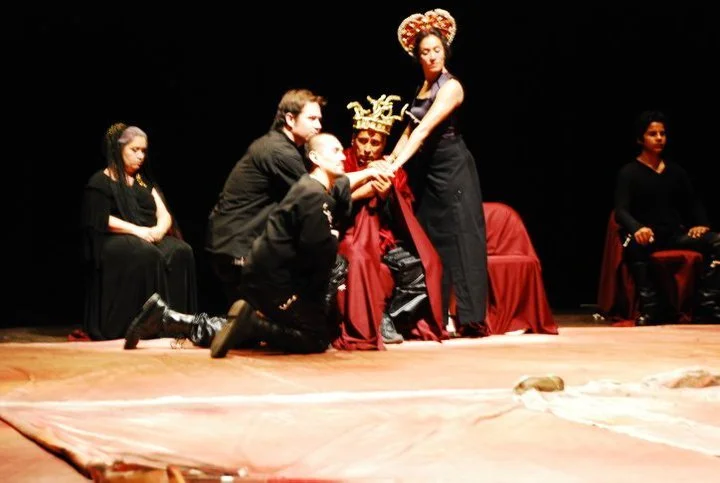
Ricardo III, Dirección Angel Norzagaray. Mexico Tour. 2009/2010
I Had Done Too Many Things
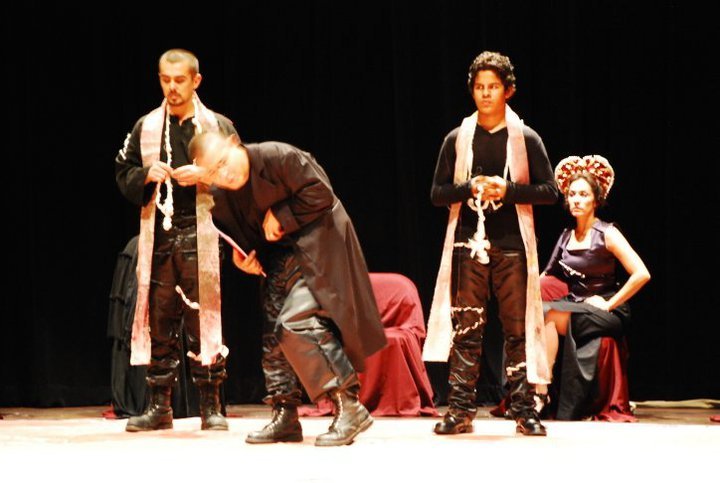
Ricardo III, Dirección Angel Norzagaray. Mexico Tour. 2009/2010
For much of my professional life, I did not know how to explain the list of things I did. Actor. Teacher. Designer. Technical director. Production manager. Director. Producer. Eventually, artistic director. In a profession that frequently asks us to identify ourselves with a single noun, my answer kept getting longer. For years, I wondered whether this meant that I had failed to specialize.
The question was complicated by the fact that my artistic formation had happened across countries. I began making theater in Mexicali, moved to California, built much of my professional life in the San Francisco Bay Area, and eventually began deliberately creating in Mexico again. Each move introduced me not only to another place but to another understanding of what an artist could be. I was accumulating disciplines at the same time that I was accumulating geographies.
In Mexicali, I began studying theater at Casa de la Cultura with Maestra Manuela Acuña in the 1990s. I acted, but acting existed within a larger world of making. Through Grupo Tercera Llamada and other projects, I found myself directing, teaching, organizing, imagining productions, and learning from whatever was happening around me. I did not yet think of these activities as separate careers competing for my attention. They were simply parts of theater.
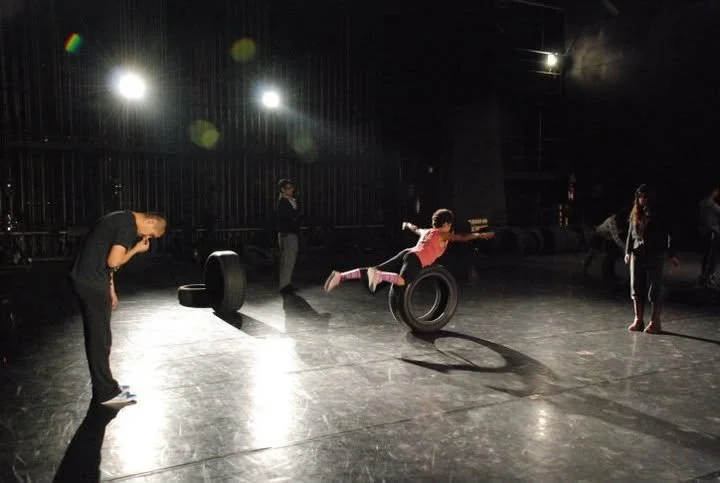
“Me Nace del Corazon”, Choreography by Gloria Godinez. Iberescena 2010.
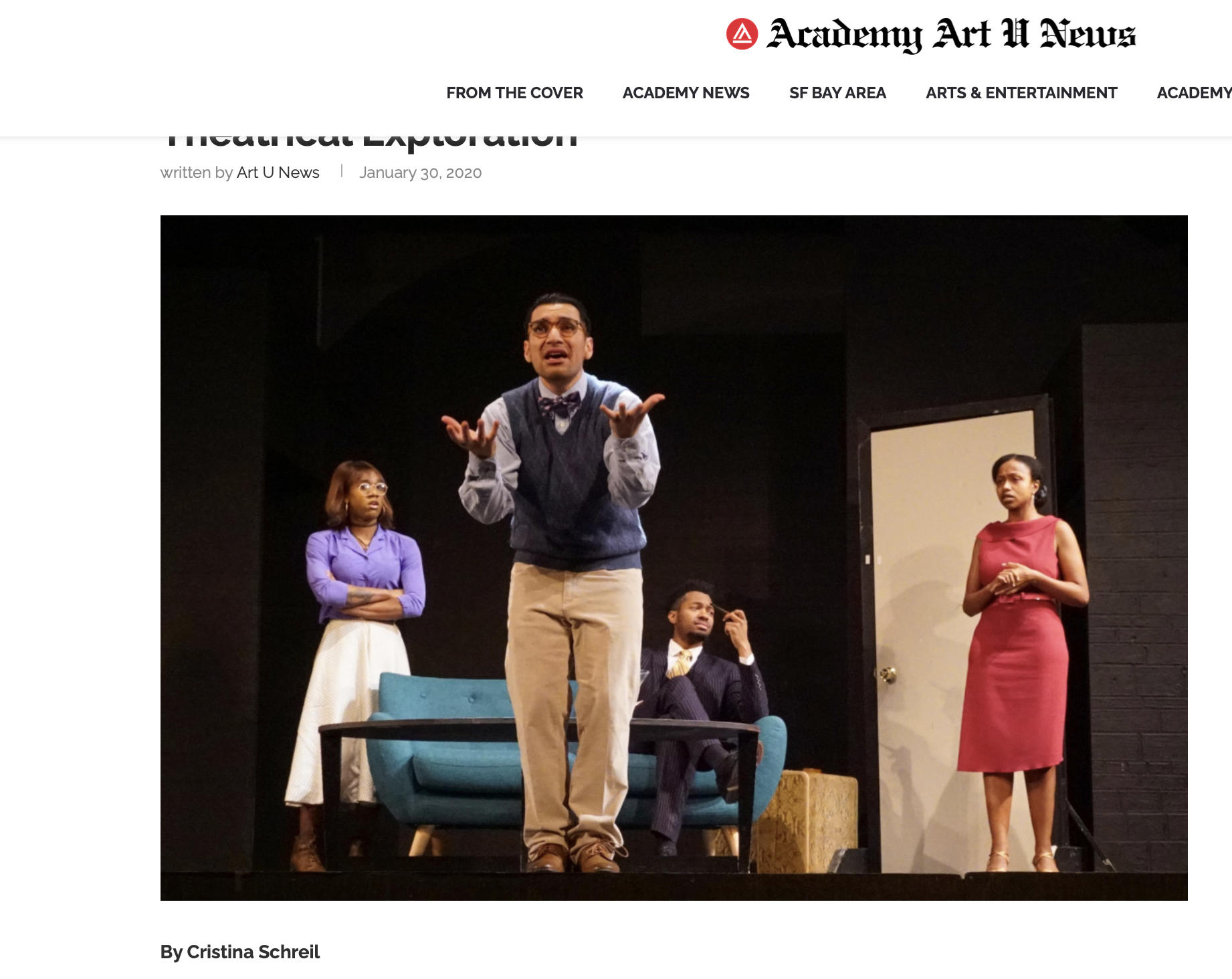
When I moved to California, my education continued differently. I became an actor in another cultural context, but I also taught. I worked with young people. I became increasingly involved in technical theater, scenery, costumes, production management, and educational leadership. Eventually, I served as Director of the Theatre Program at Academy of Art University and later as Interim Production Manager for Stanford's Department of Theater and Performance Studies. Every new responsibility taught me to look at the same art form from another position.
Yet the more professional experience I acquired, the more difficult the simplest professional question became: What do you do?
I could answer according to the room. If I was auditioning, I was an actor. If I was teaching, I was an educator. If I was managing a production, I was a production manager. If I was designing, I was a designer. None of those answers was false, but each one felt incomplete.
Somewhere along the way, I began to wonder whether the problem was not that I had done too many things, but that I had accepted the idea that they needed to be explained separately.
What Are You Here to Learn?
Years after that rehearsal with Ángel Norzagaray, I encountered the opposite side of the question while working at Academy of Art University. I was developing a one-act festival for students in the MFA acting program and had the idea of inviting the actors to participate in some of the scenery build. My instinct was not that they should become scenic carpenters. I wanted them to experience something of the physical labor surrounding their performances: to understand how a wall stands, how a platform is assembled, how scenery changes space, and how many hands contribute to the environment in which an actor eventually receives applause.
I was reminded that the students were there to learn how to act.
There were legitimate reasons for that response. A scenic shop contains equipment that requires training and supervision. There were questions of safety and liability, and scenic construction was not part of the acting curriculum. More importantly, the people working in those shops possessed specialized skills that deserved to be respected as expertise. Years of production and technical work would make me appreciate those distinctions even more.
Still, the moment stayed with me because two different questions seemed to be colliding inside my head. The institution was asking, What are these students here to learn? My own artistic education had trained me to ask, What can they learn from everything happening around them?
I needed both questions.
Specialization taught me to respect expertise. Multidisciplinary practice taught me curiosity. The first reminded me that knowing how to act does not make someone a costume designer, carpenter, director, or stage manager. The second reminded me that respecting another artist's expertise does not require remaining ignorant of it. An actor can learn something profound by watching how a designer thinks, just as a director can become better by understanding what a production manager must do to make an idea possible.
At Academy of Art University, I learned why an actor could not simply walk into the scenic shop and start building. Working with Ángel Norzagaray, I remembered why I never wanted an actor to stop wondering what was being built.
That tension became part of my artistic training.
Crossing Changed the Question

Cuarto de Baño, based on the short Story by Elma Correa. Direction artistic Héctor Zavala. 2010

Cuarto de Baño, based on the short Story by Elma Correa.
Direction artistic Héctor Zavala. 2010
Crossing cultures gradually changed how I understood identity as well. Performance artist and writer Guillermo Gómez-Peña, who was born and raised in Mexico City before moving to the United States, has described writing and performance not as competing identities but as complementary creative practices. Reflecting on his experience crossing between Mexico and the United States, he has said that performance and literature helped him reclaim agency and citizenship; elsewhere in the same interview, he describes his cultural identities as multiple, changing, and nevertheless equally authentic.¹
My experience is not Gómez-Peña's, and our artistic practices and histories are very different. What resonates with me is the possibility that multiplicity does not necessarily require resolution. Perhaps the question is not which identity is the authentic one. Perhaps they can all be authentic because each emerged from something we actually lived.
For me, that realization applied as much to artistic discipline as it did to geography. Actor here. Teacher there. Designer in another room. Production manager the following morning. Director when another project required it. Each role altered how I practiced the others. Once I understood what it took to build scenery, I could no longer walk onto a set as an actor without seeing its labor. Once I had managed production budgets, I could no longer direct without understanding that every creative decision had material consequences. Once I had taught actors, I could no longer assume that every performer reached a character through the same path. Once I designed, I understood that storytelling begins before anyone speaks.
The border had not given me another identity. Crossing it repeatedly had made it harder to believe that I needed only one.
You Cannot Return as the Person Who Left
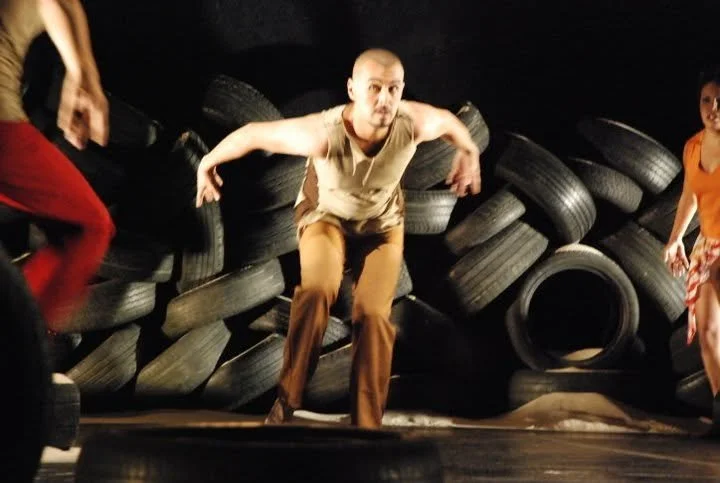
“Me Nace del Corazon”, Choreography by Gloria Godinez. Iberescena 2010.
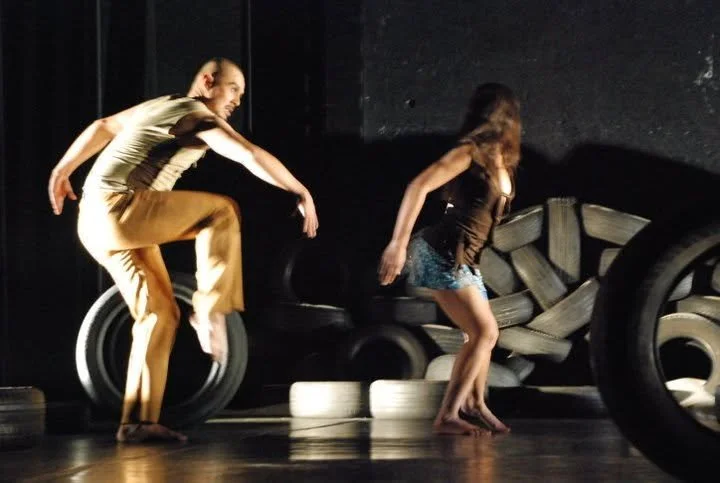
“Me Nace del Corazon”, Choreography by Gloria Godinez. Iberescena 2010.
Eventually, my movement changed direction. I had begun in Mexico and built much of my professional career in the United States, but I increasingly felt the need to create in Mexico again. What I discovered was that returning is not the same thing as going backward.
You cannot return as the person who left because another place has already entered you.
I returned carrying years of American professional experience: classrooms, rehearsal rooms, scenic shops, production meetings, universities, nonprofit organizations, youth programs, budgets, calendars, technical rehearsals, contracts, failures, opening nights, and collaborations. I did not want to discard that knowledge in order to prove that I still belonged in Mexico. Nor did I want the knowledge I had acquired in the United States to become evidence that I had somehow graduated from the artistic culture where I began.
I wanted both.
Mexican American playwright Marisela Treviño Orta describes a different but illuminating journey toward that realization. During the development of A Girl Grows Wings, a binational collaboration with Organización Secreta Teatro, Orta traveled to Mexico to research and work with the ensemble. She has described arriving with anxiety that she might be perceived as an Americanized Mexican—a pocha. Visiting museums and precolonial sites changed something in her understanding of belonging. In one museum, she realized that the civilizations she was encountering were also her antepasados.²
Orta's journey and mine approach Mexico from different directions. She encountered Mexico as a Mexican American artist seeking a relationship with histories from which geography had created distance. I began in Mexico, left, spent decades being professionally formed in the United States, and then deliberately returned without abandoning the artistic life I had built there. Yet something in her experience resonates deeply with me: crossing does not necessarily resolve identity. Sometimes it expands what we are willing to claim.
Returning to Mexico did not require me to become the artist I had been before I left. It allowed me to discover what that artist had become.
The List Is the Explanation
Once I stopped trying to make my career look linear, I began seeing connections that had always been there. Acting taught me vulnerability and what it feels like to receive direction. Teaching forced me to articulate processes that instinct alone could not explain. Dance taught me that intention becomes visible through the body long before an actor explains what a character is feeling. Design taught me that space, texture, silhouette, and material can tell a story before dialogue begins.
Technical theater taught me something equally essential: imagination eventually encounters gravity. Someone has to figure out whether the beautiful thing can stand, whether it can travel, whether it can be repeated safely, and whether it can survive eight performances a week.
Production management extended that lesson by teaching me that artistic ideas exist inside calendars, budgets, contracts, labor, and human limitations. Directing then asked me to hold those different languages together, while producing required me to create the circumstances in which all those people and ideas could meet.
Eventually, becoming an artistic director changed the question again. My responsibility was no longer only to make my own work; it was to create conditions in which other artists could make work I would never have imagined myself.
Seen separately, the titles can make my career appear nonlinear. Seen together, they reveal a process of accumulation. I did not stop being an actor when I became a teacher, nor did I stop being either when I began designing. Production management did not take me away from directing; it changed the kind of director I could become. Every discipline complicated the others.
The same is true geographically. Mexicali did not disappear when I moved to California. California did not disappear when San Francisco became home. San Francisco did not disappear when I began returning to Mexico City. I carry the rehearsal rooms of all those places with me.
The artist I became was not made despite that movement.
He was made by it.
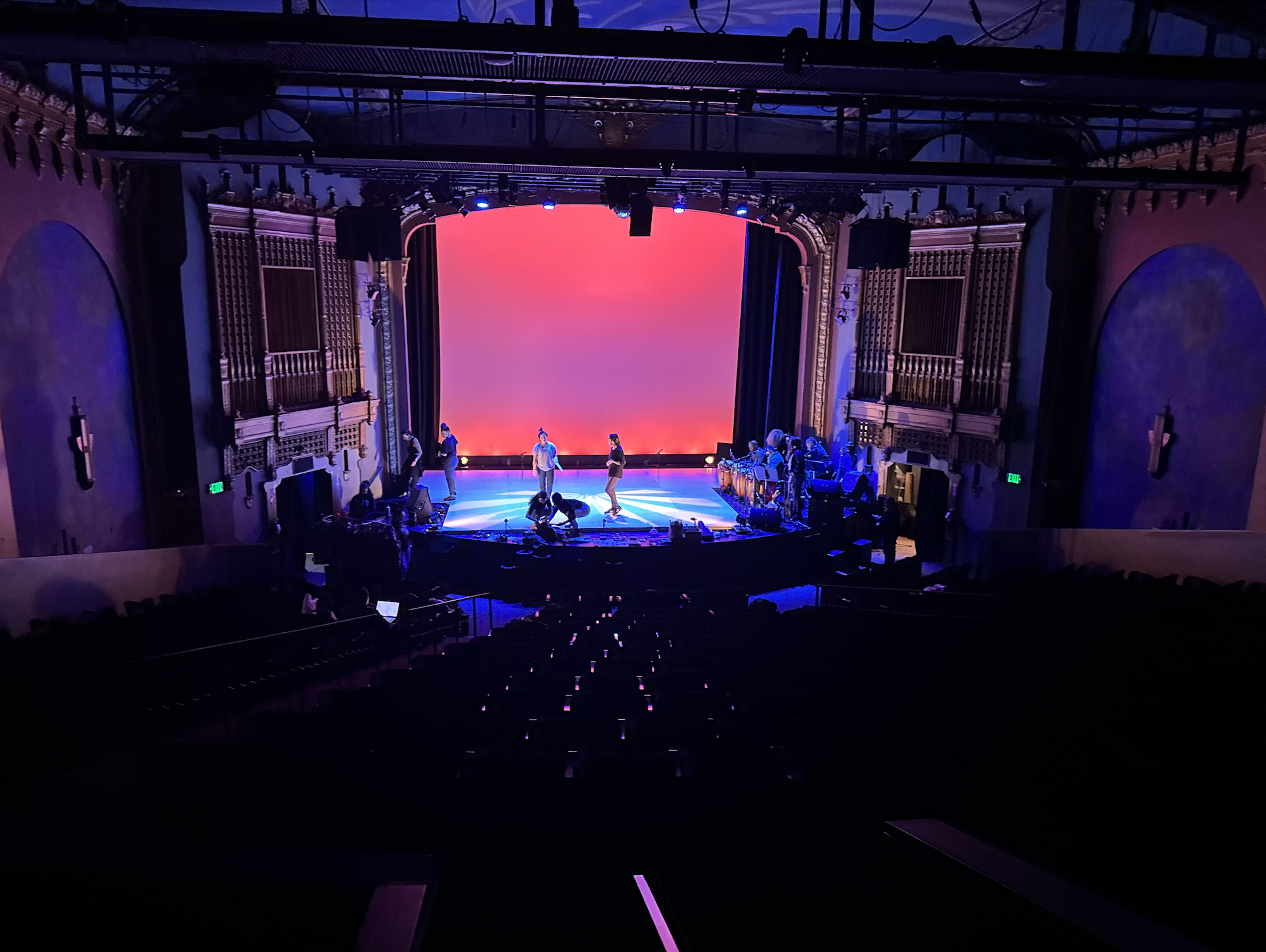
“Ghostly Labor” rehearsal. by Vanessa Sanchez and La Mezcla, San Francisco CA, 2024
What Happens When You Stop Choosing?
There is a seductive idea that eventually we arrive at ourselves. We find our discipline, develop our voice, establish our practice, and become the artist we were meant to be. My experience has been much messier and, I think, much more interesting.
I am still becoming.
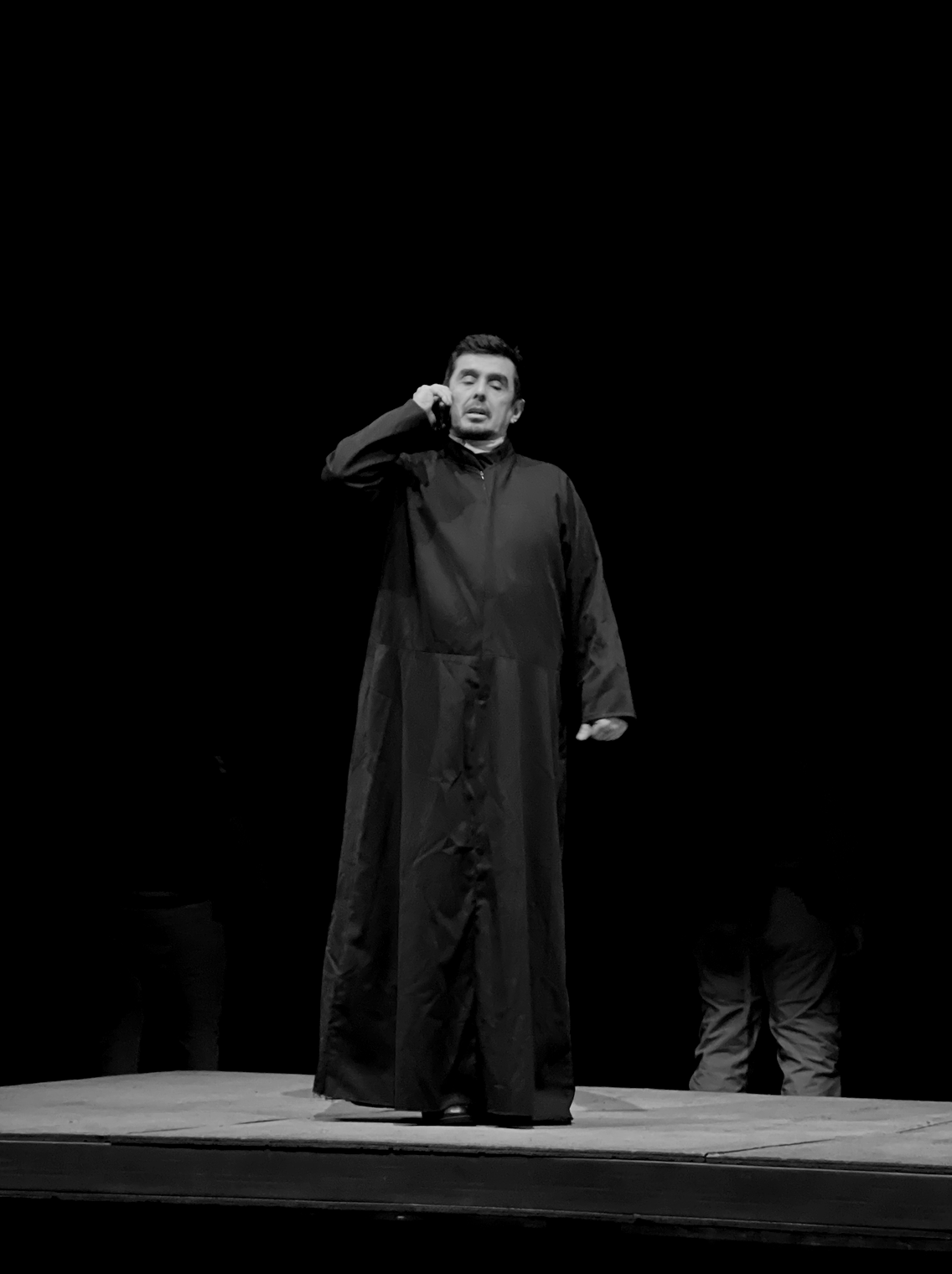
“Del Engaño del desierto” Dirección Terezina Vital. Mexico Tour. 2025/2026
Beatrice Basso describes something related in her account of Práctica, the multidisciplinary exchange she created for artists from San Diego and Tijuana. Theater makers, visual artists, dancers, and poets met on both sides of the border, sharing exercises, research, meals, conversation, and time. Basso writes that the project required artists to occupy the same space for many hours, allowing practices and questions to intersect rather than forcing collaboration toward an immediate product.³
What interests me about that model is not simply that artists crossed a national border. They also crossed artistic ones. The dancer could encounter how the visual artist sees. The theater maker could enter another person's research. Nobody needed to abandon expertise in order to become curious about someone else's practice.
That is increasingly how I understand my own artistic life. Multidisciplinarity does not mean that I am equally accomplished at everything, nor does it mean that specialized training is unnecessary. It means that I refuse to believe curiosity must end where my job description does.
Perhaps that is what crossing cultures ultimately taught me. The most useful border is sometimes the one you discover inside yourself: the line between what you have been told you are and what you might become if you allow yourself to cross it.
Building the Room I Once Needed
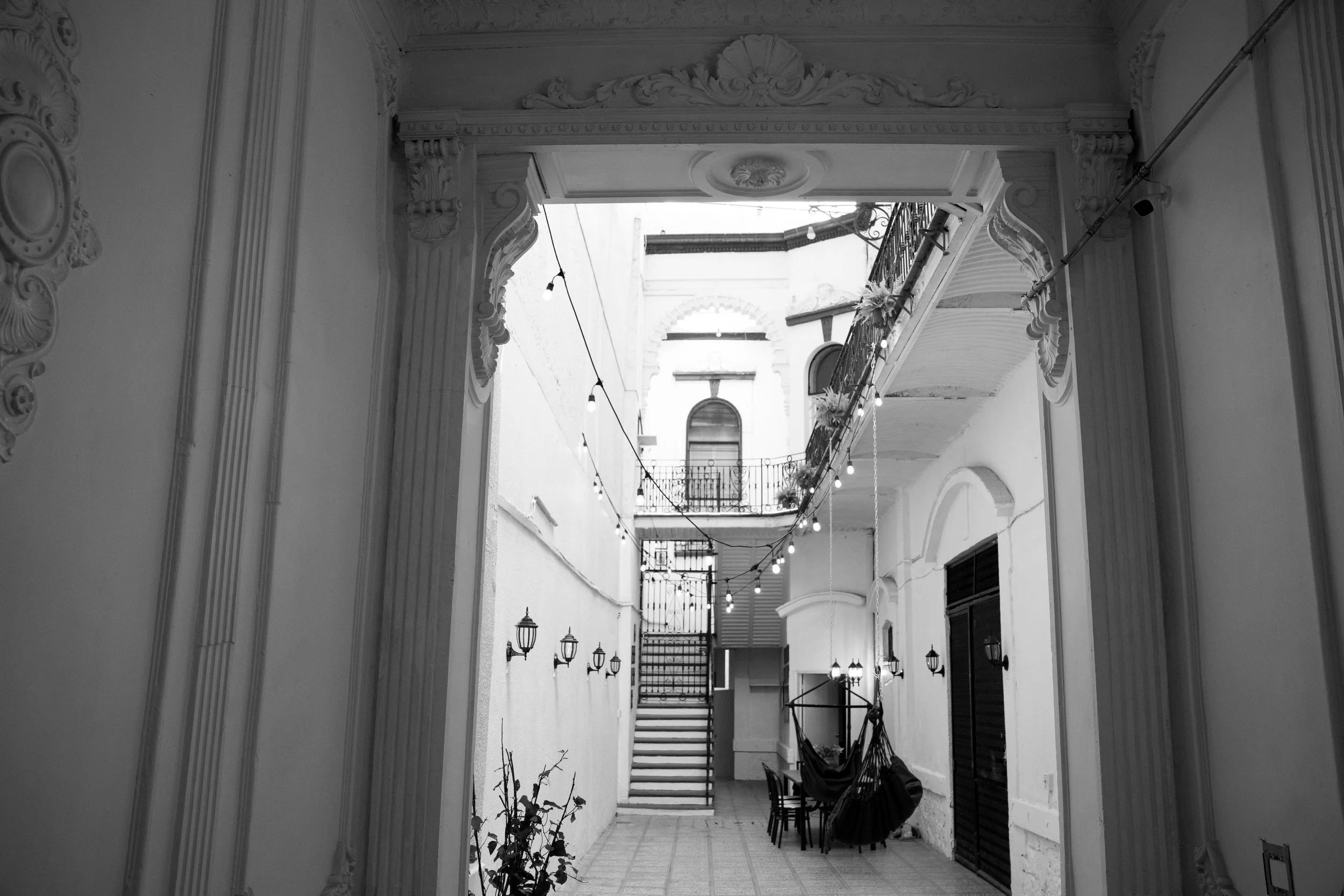
That realization eventually changed what I wanted to create for other artists. When I began developing retreats, fellowships, workshops, and exchanges through Hechale Productions, I was certainly interested in bringing artists from different countries together. But underneath that goal was something more personal. I wanted to create environments where artists could encounter themselves differently.
That impulse eventually led to Casa Hechale.
When I look at Casa Hechale now, in Santa María la Ribera in Mexico City, I can recognize almost every version of myself in the idea. The actor wants a room where performers can take risks. The teacher wants artists to have permission to ask questions. The designer sees possibilities in the building itself. The production manager wants the schedule to work. The director wants bodies, text, space, and imagination to collide. The producer worries about how to sustain it. The artistic director asks who else should be invited inside.
None of them had to disappear for the next one to exist.
That matters because I do not want Casa Hechale to be a place where artists arrive already knowing exactly who they are supposed to become. I want an actor to encounter a playwright and become curious about writing. I want a director to watch a dancer and reconsider how bodies tell stories. I want someone who has always thought of themselves as a performer to suddenly become fascinated by space, objects, sound, dramaturgy, or design. I want artists to respect one another's expertise while remaining curious enough to learn from it.
In other words, I want to build the kind of room that has changed me throughout my life: a room you enter believing you have been invited to do one thing and leave having discovered another possibility.
The Artist I Became
When people describe those of us who have lived across countries, they often say we exist “between two worlds.” I understand the phrase, but I no longer think it describes me. “Between” sounds like a waiting room, a temporary location occupied until someone finally decides where they belong.
I am no longer waiting.
Mexicali is part of the artist I am. So are California and San Francisco. Now Mexico City is changing me again. One place does not invalidate the other, just as becoming a director did not invalidate the actor or becoming a producer erase the designer. They accumulate. Sometimes they contradict one another. Sometimes one teaches me to question what another taught me. That tension is not something I need to solve; it is part of my practice.
Perhaps this is what happens when an artist stops trying to decide which artistic world they belong to: belonging stops being the destination.
Creating becomes the destination.
I think back to that rehearsal room in Mexicali. I had returned from the United States determined to behave professionally, which at that moment meant doing the job I had been given. I was an actor. I would act. Then Felipe and Ángel started talking about the production, Terezina called me over because we were supposed to get tacos, and I allowed myself into the conversation.
I had entered the room as an actor.
I left it knowing I could also be a designer.
Nearly three decades into this journey, I understand why that memory has stayed with me. The most important artistic rooms in my life have not been the ones that confirmed what I already knew how to do. They have been the rooms that allowed me to discover something else I could become.
Casa Hechale is my attempt to build one of those rooms for someone else.
The artist I became could not have been made in one country because no single place contained everything I needed to learn. He could not have been made in one discipline either.
For years, I thought I needed to explain that.
Now I understand that the list is the explanation.
Notas finales
Guillermo Gómez-Peña, “The PEN Ten with Guillermo Gómez-Peña,” PEN America, April 12, 2016, https://pen.org/the-pen-ten-with-guillermo-gomez-pena/. Gómez-Peña describes writing and performance as complementary creative processes integral to his identity and states that when he began crossing the Mexico–United States border, the two practices helped him recover a sense of agency and citizenship. He also describes his multiple cultural identities as changing according to context while remaining equally “real” and “authentic.”
Yazlin Juarez, “A Line in the Sand: Behind the Script with Marisela Treviño Orta,” Latino Theater Co. at The LATC, accessed September 27, 2026, https://www.latinotheaterco.org/behindthescript/maricelaorta. Juarez recounts Treviño Orta's 2023 research trip to Mexico during the development of A Girl Grows Wings. Treviño Orta describes arriving with a fear of being perceived as an Americanized Mexican, or pocha, and later realizing while visiting a museum that the ancient civilizations represented there were also her ancestors. The play was developed with Mexico's Organización Secreta Teatro as Latino Theater Company's first binational production.
Beatrice Basso, “Blurring Borders with Práctica/Borrando las fronteras con Práctica,” HowlRound Theatre Commons, July 30, 2018, https://howlround.com/blurring-borders-practica-borrando-las-fronteras-con-practica. Basso describes Práctica, a 2017 exchange involving theater makers, visual artists, dancers, and poets from San Diego and Tijuana who met on both sides of the border over three months to share artistic research and practice.
